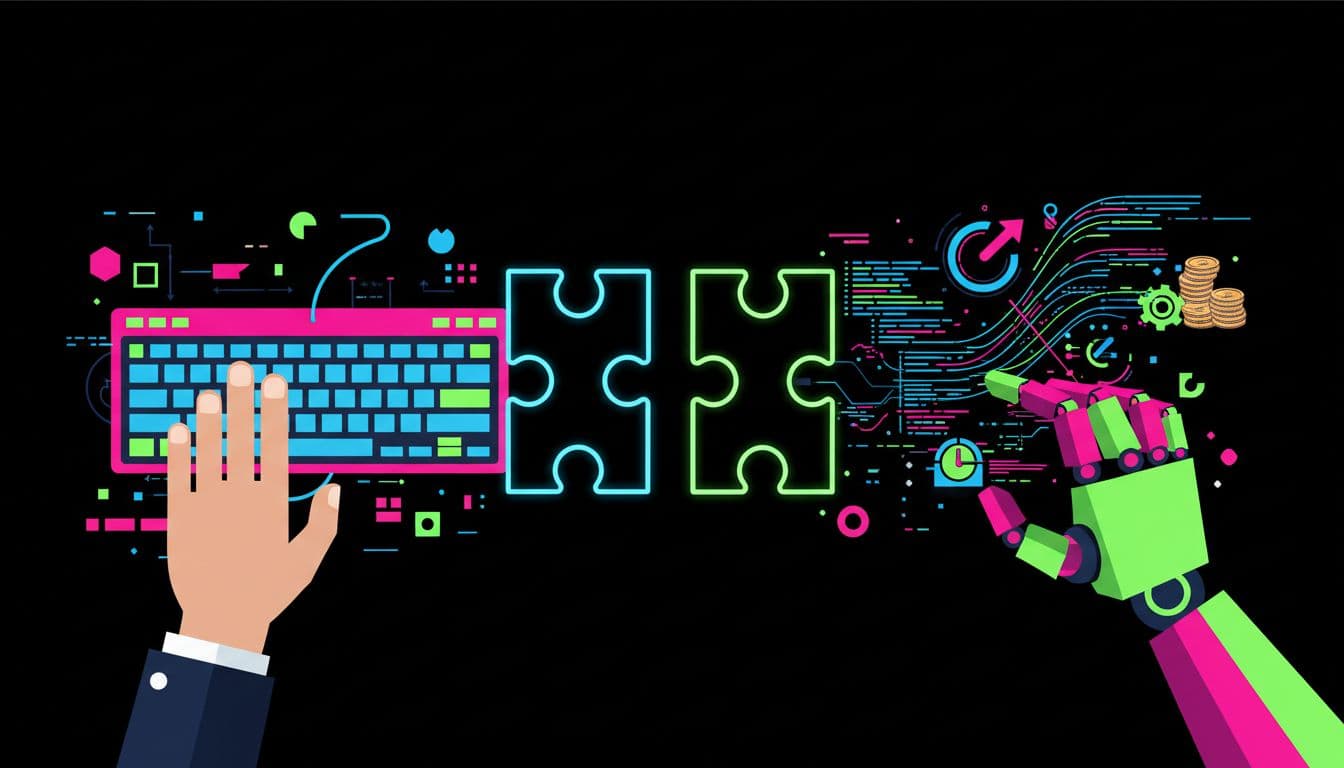
Today’s teams are discovering that AI agents are no longer interesting add-ons—they’re daily collaborators, woven into project channels and recruiting workflows alike. The backdrop is relentless: shorter hiring timelines, talent shortages, and developer teams that expect everything, everywhere, all at once. Meanwhile, the old rituals of hiring—spirited conversations, layered resumes, infinite interpretation—are giving way to instant parsing, structured insights, and recommendations that arrive before the next coffee break.
Recruitment has always been a complex conversation between multiple parties. Now, the conversation includes agents: parsing, assessing, and even suggesting top-fit matches with a speed and precision that baffles the classic approach. For founders, HR tech pioneers, and anyone designing tomorrow’s talent stack, this isn’t just about automation or efficiency. It’s the leap to smarter, fairer, future-proof hiring—powered by explainable, machine-readable workflows. Read on to see how agent-driven teams are reinventing recruiting, why profiles are being redesigned for AI-native ecosystems, and how this translates to better speed and quality for everyone involved.
Whether you’re a founder aiming for scale or a technical HR lead tired of static tools, understanding the agentic shift is the best investment you’ll make in your team’s future.
AI Agents Join the Team – A New Recruiting Paradigm
It’s a small leap, but a seismic one: AI agents are no longer hidden behind dashboards or reserved for scheduling interviews. Increasingly, they’re true teammates—reading, syncing, flagging, and even participating in talent decisions. In this new paradigm, recruitment is less about searching for variations of a CV and more about structuring context that’s navigable by both people and agents.
Where do agents enter recruiting ops? Here’s a quick checklist:
- Parsing inbound applications: Agents triage skills, experience, and fit before a human ever reviews the profile.
- Scanning for hidden fits: Sourcing bots pull talent from networks, databases, and even open code repositories.
- Real-time assessment: Whether it’s a technical coding challenge reviewed by a code-agent or a support case read for style and tone, agents process and score at scale.
- Workflow orchestration: Agents nudge, schedule, and document interactions, ensuring nothing falls through the cracks.
Which roles benefit first? Unsurprisingly, technology teams, product, and support—places where skill can be quantified, outputs are digital, and speed matters. For example, a developer’s coding agent and a recruiter’s sourcing bot might simultaneously review the same structured candidate data, converging almost instantly on the technical fit and even project alignment.
This shift is about empowerment. The fast, structured context delivered by agents lets humans focus on nuance, culture, and vision, rather than shuffling candidate stacks.
The Rise of the Machine-Readable Talent Profile
Enter the WorkorAI Talent Profile: a living, structured, and machine-readable representation of a candidate or team member. This isn’t another round of resume redesign. The Talent Profile connects skills, experience, compensation expectations, remote-readiness, cultural markers, and more—synthesized in a format that AI agents and humans can both parse.
Why does machine-readability matter so much now? Because real-time collaboration between agents and humans only works when all parties operate on shared, structured context. Agents need fields, tokens, and relationships—not vocabulary acrobatics.
Here’s how classic and next-gen profiles compare:
| Classic Resume | WorkorAI Talent Profile |
|---|
| Freeform, subjective text | Structured context, skills, preferences |
| Human read/interpreted | Instantly parsed by AI agents and tools |
| Updated rarely | Live sync with developer activity |
| Prone to bias | Evidence-backed and explainable |
The recruiting process transforms:
- Before: CVs pile up, every reviewer sees something different, bias and fatigue creep in. Assessments are slow, fact checks slower.
- After: Agents review live skills and context, highlight evidence, and surface high-fit matches in real time. Teams act decisively, candidates get clarity, and ambiguity gives way to explainable recommendations.
This isn’t just theory—it’s a growing reality for development teams using WorkorAI, as detailed in the agent-ready hiring guide for CTOs.
Model Context Protocol (MCP) – The Connective Layer
What enables this agentic harmony? The Model Context Protocol (MCP). With MCP, any compatible AI assistant—Claude, Codex, Copilot, Cursor, Gemini, Antigravity, OpenClaw—can access a candidate’s or employee’s WorkorAI career context with permission. This means:
- No more brittle, one-off integrations: MCP provides a secure, standardized connection for every agent a team needs now or in the future.
- Talent-controlled sharing: The MCP key acts as a pass, granting or revoking access to a profile’s context, always under user control.
- Explainability by default: Every AI-powered action, from sourcing to scoring, is traceable and auditable by both agents and recruiters—supporting fairness and compliance.
MCP is the subtle but powerful shift that links all tools and agents without multiplying data silos or risking privacy. It’s how future-ready teams keep their stack agile, secure, and explainable.
Explainable, Searchable, Fair – The Modern Recruiting Workflow
The new workflow starts not with search, but with understanding. Instead of keyword spamming or chasing secondary signals, recruiters and their agent teammates frame context-rich queries—What’s the real skills match? Who fits our tech stack and salary band? How do soft skills align with team dynamics?
Explainability is at the heart of this. Every fit or rejection is backed by evidence—skills data, compensation expectations, code contributions. Human and agent collaborators can review, discuss, and improve recommendations, not just accept opaque judgments.
This empowers:
- Anti-bias controls: By focusing on structured evidence, teams can actively monitor and minimize the influence of unchecked bias, supporting stronger DEI initiatives.
- Better team prediction: Agents highlight not just technical fit but alignment with team culture, remote preferences, and evolving project needs.
Consider a recent technical team round: before moving to agentic job search with WorkorAI, hiring meant weeks lost on interviews and manual screening, with candidates ghosted at every stage. After adoption, high-fit matches surfaced immediately, feedback was evidence-backed and actionable, and the entire process was both faster and more transparent.
For more on structuring talent context for better outcomes, see "Verified Developer Profiles Beat Screening Calls" and "5 Signs Your Talent Pipeline Blocks Top Hires".
FAQ
What’s the real difference between classic HR tech and agent-driven recruiting workflows?
Classic HR tech works atop resumes and subjective data, requiring manual review at each step. Agent-driven workflows use structured, explainable profiles that allow both humans and AI to collaborate instantly, ensuring every decision is evidence-backed and reproducible.
How do AI coding agents (like Copilot, Claude, Codex) use WorkorAI Talent Profiles?
These agents access structured talent data (skills, experience, project history) in real time via the Model Context Protocol (MCP), making it possible to match openings, suggest challenges, or highlight upskilling areas without manual handoffs.
Why is machine-readability now mandatory in tech recruiting?
Because agents—and modern workflows—need structured context, not freeform text. Machine-readable profiles enable instant parsing, fairer comparisons, and seamless integration across hiring stacks.
Does machine-readable context mean more bias or less?
Less. Structured profiles bring clarity to what matters—skills, activity, preferences—making it easier to control for bias and document fair decision-making at every stage.
How can my team upgrade to agentic job search without losing the “human side” of hiring?
Agent-driven workflows automate the repetitive, error-prone steps, so humans can focus on culture, team fit, and growth. Structured profiles and explainable scoring only enhance your team’s ability to connect meaningfully.
Recruiting is entering an era where teams and AI agents work side by side, shifting from laborious interpretation to autonomous, explainable, high-velocity decision-making. Those who embrace structured, machine-readable profiles and universal integration protocols like MCP will build talent operations that are fairer, clearer, and far more competitive. The time to secure your hiring advantage is now: start by implementing WorkorAI Talent Profiles and connect them through MCP to the agents your team already trusts.
Ready to future-proof your recruiting? Run the WorkorAI install command in your team’s AI agent of choice and experience explainable, agentic hiring workflows that move as fast as your business. Join the conversation—lead the transformation.