Can onboarding risk predict team fit before hire?
Engineering hiring is never just about filling a seat—it's about accelerating team velocity and setting the stage for collective achievement. Yet even the strongest technical hires can generate friction if team fit isn't calibrated from the start. Too often, onboarding risk is a post-offer discovery, manifesting as painful misalignments in communication, autonomy, or expectations—just when momentum is needed most. The hidden price isn’t merely onboarding delays; it’s stalled launches, muted morale, and, all too frequently, quiet departures.
The traditional approach has long required trust in a candidate’s ability to adapt, with onboarding risk only surfacing weeks after the contract is signed. What if engineering managers could turn the tables—forecasting integration risk and ensuring optimal team fit before a single offer letter is drafted? This article explores how emerging agentic workflows and structured assessment—specifically through WorkorAI—now enable early, data-driven onboarding risk evaluation, setting the standard for proactive, high-performance hiring.
Why Traditional Hiring Fails at Surfacing Onboarding Risk
For decades, the hiring process has leaned on a well-worn toolkit: resumes stacked with timelines and technologies; skills interviews focused on problem-solving under pressure; the fabled “culture fit” chat that tries, and generally fails, to decode whether this engineer will thrive amongst current teammates. Yet the most common narrative persists: everything seems solid until week three, when the real cracks emerge.
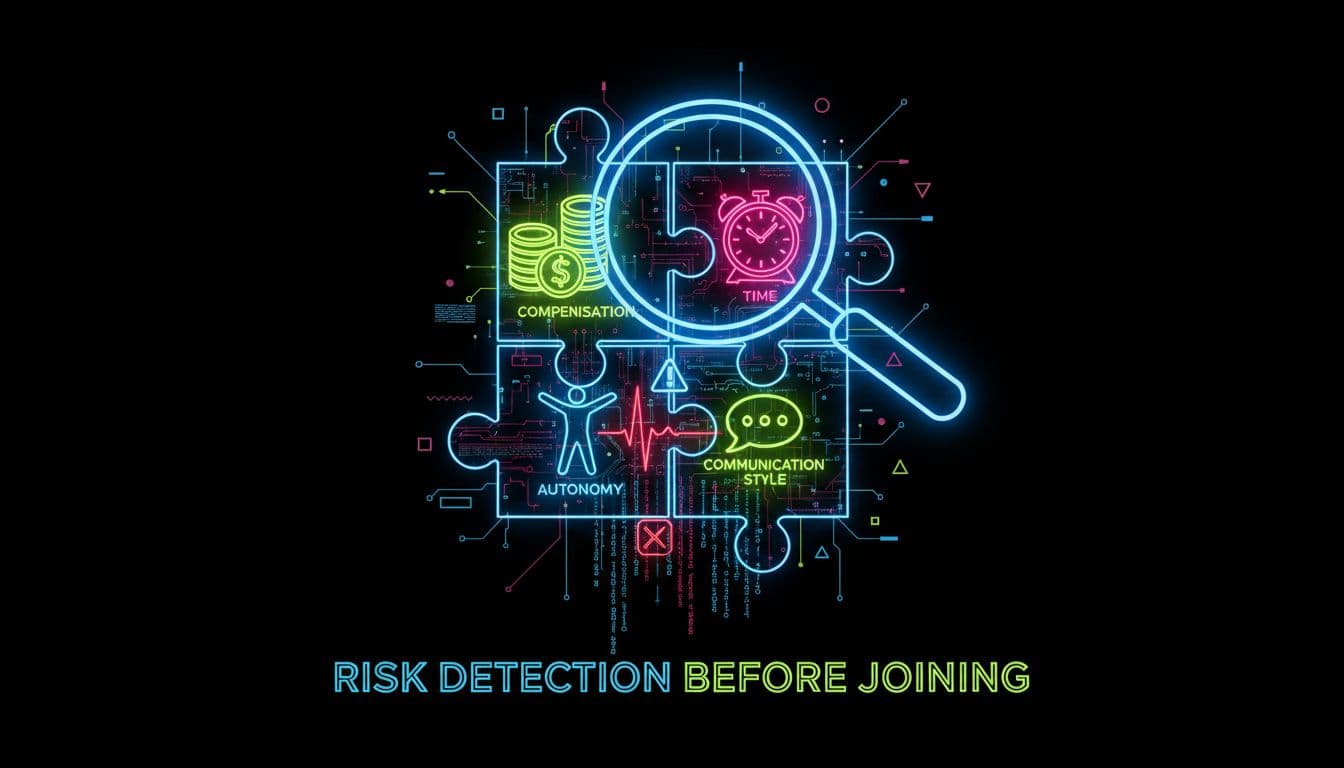
Perhaps communication rhythms are misaligned—a new hire is used to asynchronous updates, while the team favors real-time stand-ups. Autonomy isn’t just a buzzword; it’s the difference between self-directed progress and the need for heavy onboarding scaffolding. The root cause? Traditional methods overlook the deep context—individual career arcs, team evolution stage, expectations for decision-making, and the nuances of product velocity. Without structured mapping of these variables, onboarding risk remains invisible until it’s too late.
Fresh Approaches: Surfacing Onboarding Risk Early with WorkorAI Career Context
WorkorAI introduces a new era of structured candidate assessment—a dynamic Talent Profile that doesn’t just log skills, but charts autonomy levels, preferred communication modes, experiences across the product lifecycle, and expectations for team maturity. The goal isn’t to standardize profiles, but to create context-rich signals: what does this engineer genuinely need to thrive, and how do those needs align with the team at hand?
Enter the “agentic job search”: WorkorAI leverages personal AI agents, each equipped to securely exchange context through the Model Context Protocol (MCP). Before any offer is on the table, these agents run a risk audit—autonomy gaps, communication friction, and mismatched expectations are flagged, empowering both candidate and team to act on real insight, not hopeful assumptions.
| Classic Hiring | Agentic Hiring (WorkorAI) |
|---|
| Skills listed by resume | Skills and expectations deeply verified |
| Team risk revealed late | Risks mapped by AI agent pre-hire |
| Generic interviews | Team-contextual assessment |
| Candidate self-report | AI cross-verifies with real context |
With this architecture, engineering managers aren’t left guessing—they’re presented with actionable onboarding risk maps before the final conversation even happens. For a deeper look at related AI-driven assessment evolution, see “1 Verified Developer Profile Beats 10 Screening Calls” and “Agent-Ready Hiring: Why CTOs Choose WorkorAI Now.”
Success Stories: Engineering Teams Winning with Early Risk Detection
Leaders deploying WorkorAI have seen onboarding risk boundaries shift dramatically. For example, distributed engineering teams report measurable drops in failed onboarding—sometimes up to 35% fewer “late-stage” mismatches—by surfacing key dissonances up front. One cloud-native product team recently identified, before an offer, that a top candidate’s optimal communication window clashed with the team’s critical path. Rather than forcing a fit and risking morale, both parties redirected: the engineer found a project better suited to their workflow, and the original team executed with confidence. No drama, no surprise course corrections.
This isn’t just small talk: it’s the operationalization of team fit as a measurable, improvable outcome. For broader strategies on optimizing the tech talent pipeline, explore “5 Signs Your Talent Pipeline Blocks Top Hires Now.”
How to Implement Early Risk Assessment in Engineering Hiring
Start transforming your approach with these steps:
- Clarify autonomy and communication expectations for each role—write them down, not just in job posts but as context data.
- Invite candidates to complete their WorkorAI Talent Profile.
- Connect your hiring process to AI agents via secure MCP keys—enabling contextual data exchange.
- Evaluate onboarding risk and team fit with agentic connectors before the final assessment, making evidence-based decisions.
- Leverage integrations: WorkorAI connects seamlessly with leading AI platforms—Claude, Codex, Cursor, Gemini, GitHub Copilot, Antigravity, OpenClaw, and more—so your workflow remains agile and current.
FAQ
Q: How does onboarding risk differ from general candidate assessment?
A: Onboarding risk probes beyond technical skills to forecast real-world team integration—spotting misalignments in autonomy, communication, and workflow preferences.
Q: Can AI agents really predict team fit?
A: Absolutely. By leveraging structured context from the WorkorAI Talent Profile, personal AI agents can anticipate and flag potential mismatches before the offer stage.
Q: Which platforms support this agentic assessment workflow?
A: WorkorAI plays well with all major AI engineering environments—Claude, Codex, Cursor, Gemini, Copilot, and others—thanks to MCP and personal AI agents.
Q: Isn’t this more work for the candidate?
A: Quite the opposite—a one-time profile setup drastically reduces repetitive interviews, helping candidates receive better-matched offers with less friction.
Q: How does this benefit the team beyond hiring?
A: Early onboarding risk detection accelerates integration, enhances morale, and enables teams to deliver results faster—with every new hire set for success from day one.
Conclusion
Modern engineering managers have a new superpower: identifying onboarding risk and perfecting team fit before any signatures hit the dotted line. By actively leveraging structured career context and agentic workflow tools, hiring evolves from guesswork to a science—delivering consistently better outcomes. The message is clear: don’t wait for week-three surprises. Harness early risk detection and watch your engineering teams thrive.
Call to Action
Ready to proactively eliminate onboarding risk? Connect your engineering hiring workflow to the WorkorAI Career Agent today. Run the install command in your AI agent environment—Claude, Codex, Gemini, Cursor, and beyond—and transform unpredictability into data-driven team building. Subscribe for updates, join our discussion, or take the first step to future-ready hiring—now!