save cto time: ai recruiter for tech screening
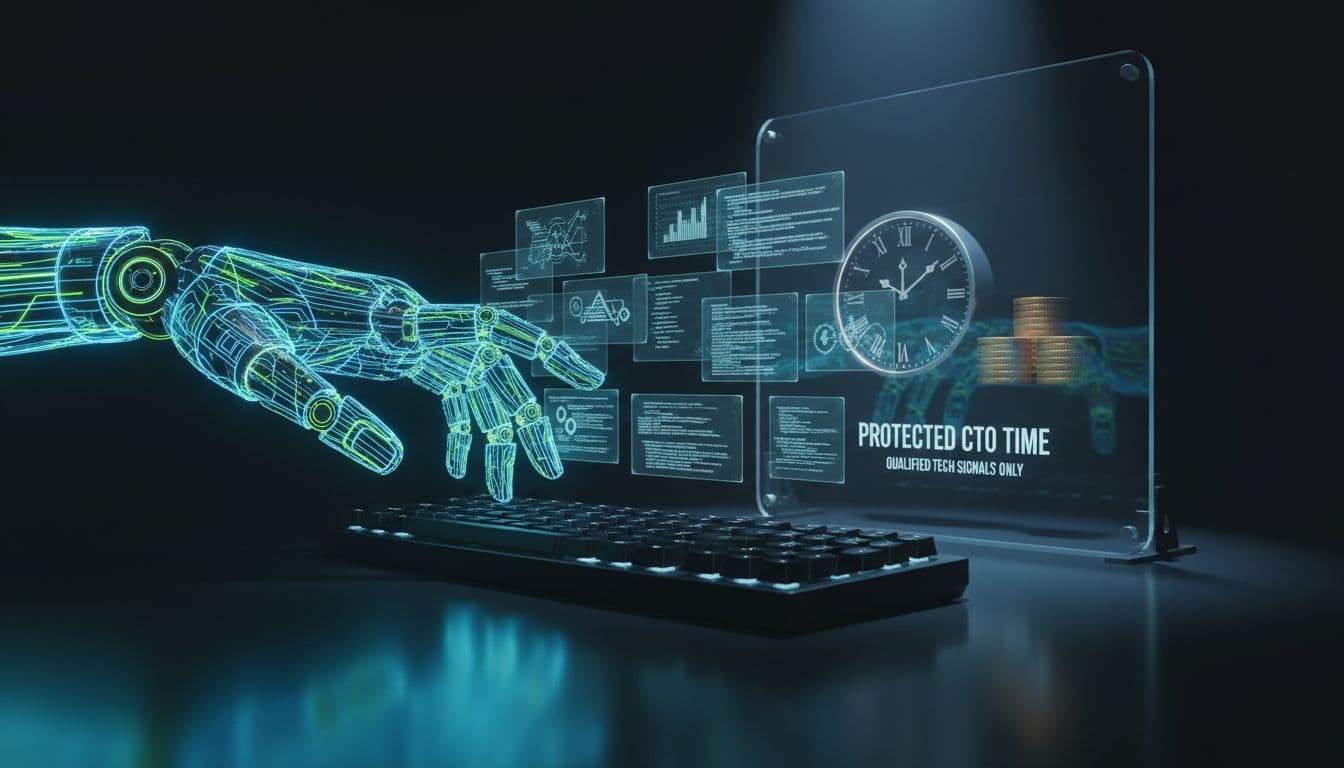
Every CTO and founder dreams of being the accelerator, not the bottleneck. Yet in today’s frantic hiring landscape, technical leaders regularly find themselves tangled in first-round interviews, buried in résumés, and deluged by candidate screening that feels more like sifting sand than building the future. But with developer talent in high demand and product velocity at stake, this well-worn ritual simply doesn’t scale. The hidden price? Leadership hours vanish, cognitive fatigue sets in, and team growth sputters.
There’s no villain here—only an old reflex. The idea is honorable: safeguard quality by having CTOs personally inspect each candidate’s potential. But when every hour spent on early-stage screening is an hour stolen from high-leverage architectural decisions or vision work, the cost adds up. This article unmasks a new reality: empowering AI recruiters, armed with real developer context, to handle first-round technical assessments. By automating risk surfacing and highlighting star talent, AI liberates your most strategic hours and transforms the screening process from a necessary evil into a growth driver.
The CTO Screening Trap—Why Traditional Approaches Are Unsustainable
Why do so many technical leaders still own the first gate in developer hiring? The intent is sound—maintain quality, set culture, and preempt mis-hires. However, here’s the friction beneath the surface:
- Time Tax: With technical leadership screening each candidate, the calendar quickly collapses under the weight of 60–90 minute interviews, not to mention prep and feedback loops.
- Inconsistency: Even the sharpest CTO is human—energy levels, bias, and limited bandwidth introduce subjectivity and leave gems undiscovered or slip-ups undetected.
- Scaling Gridlock: Team expansion stalls while leadership juggles hiring; high-impact projects must wait for another “screening marathon hour.”
The difference an AI recruiter makes is starkly visible:
| Stage | Classic Model (CTO screens) | With AI Recruiter |
|---|
| First Screening | CTO/Tech Lead required | AI recruiter + risk surfacing |
| Deep Tech Review | CTO—hands-on, final signal | CTO—high-signal, focused |
| Time per Candidate | 60–90 min | 7–15 min |
CTOs are strategy catalysts, not résumé sleuths. When freed from the detective work, leaders can channel insight, not energy, into the calls that truly shape the business. For cross-reference on reframing pipelines, see 5 Signs Your Talent Pipeline Blocks Top Hires Now.
Enter the AI Recruiter—Smart Technical Screening for CTOs
What’s changed? AI recruiter platforms like WorkorAI, drawing on structured Talent Profiles and the Model Context Protocol (MCP), now offer context-aware, rigorous first screens tailored for developer roles. Here’s how it unfolds:
- Integrated Context: The AI recruiter ingests candidates’ WorkorAI Talent Profiles—covering tech stack mastery, validated code samples, seniority, expected compensation, and professional goals.
- Dynamic Questioning: Early assessments blend skill-based challenges with context-relevant scenario prompts—mirroring live technical work, not just reciting textbook trivia.
- Automated Risk Surfacing: Gaps in expertise, potential project mismatches, and culture flags are automatically flagged for leadership review.
Startups already deploying this approach report remarkable efficiency: CTO time spent on technical screening drops by 3–5x, while top candidates progress faster and first-interview match rates climb. The AI recruiter doesn’t wrest control—it tidies the stage. CTOs now make fewer, sharper final calls, investing attention where it leaves the largest mark.
For more on the underlying tech, explore Agent-Ready Hiring: CTOs Choose WorkorAI Now.
From Resume Filters to Contextual Evaluation—Why AI Wins
Classic résumé parsing remains stubbornly two-dimensional: screen out by keywords, hope for a match, interview, repeat. In 2024, that's simply not enough. Modern AI recruiter systems, leveraging the WorkorAI Talent Profile, shift the paradigm to context-rich evaluation:
- Comprehensive Fit: It’s not just about “JavaScript” or “Kubernetes” appearing as keywords; it’s about actual stack expertise, timezone availability, and personal growth trajectory.
- Decision-Ready Briefs: Instead of a stack of résumés, CTOs receive synthesized reports: “Fit with our Kubernetes microservices stack is strong; watch for limited deep cloud experience.”
This leap from static word matching to nuanced, context-aware assessment frees leaders from low-yield labor and puts high-signal candidates in the spotlight. For deeper coverage on this transition, reference 1 Verified Developer Profile Beats 10 Screening Calls.
How to Implement AI Technical Screening—Checklist for CTOs and Founders
Ready to reclaim your calendar? Here’s a quickstart for implementing context-aware AI technical screening:
- Enable Talent Profiles: Invite or require candidates to connect their WorkorAI Talent Profile—providing code samples, stack, and goals.
- Set Screening Parameters: Define the core stack, critical experience, and risk signals unique to your product vision.
- Integrate Seamlessly: Use the Model Context Protocol (MCP) to plug AI recruiter into your hiring flow—think “add-on,” not overhaul.
- Review and Decide: Rely on concise AI briefs to make targeted final interview picks.
- Close the Feedback Loop: Gather team input on AI assessments, refining screening logic for future cycles.
Install command:
workorai install recruiter --profile-context --stack=your_tech_stack
No workflow disruption, just sharper, faster hiring.
Measuring Success—Metrics That Matter
How do you spotlight the ROI of AI-powered tech screening? Focus on:
- CTO/Tech Lead Time Saved: Track average screening hours per hire, pre- and post-AI recruiter.
- Risk Signal Detection: Count early-stage red/yellow flags found before leadership interviews.
- Candidate Experience: Monitor satisfaction scores and first-interview match rates.
- Engineering Velocity: Chart “time to team productivity” after new hires join.
Reliable data tells the story: teams scaling faster, leaders reclaiming bandwidth, and products shipping sooner.
FAQ
1. How does the AI recruiter differ from classic HR screens?
Unlike generic filters, it evaluates technical fit, real stack experience, and flags risks—delivering briefs tailored for tech leaders’ decisions.
2. Will an AI recruiter miss culture or soft-skill signals?
AI risk surfacing includes communication and culture-relevant markers; CTOs still own the final in-depth culture assessment.
3. How do we know the AI evaluation is accurate?
It’s built on structured WorkorAI Talent Profiles and continually refined with CTO feedback, ensuring relevance and reliability grow with use.
4. Can this work with our existing AI coding agents or IDEs?
Absolutely—WorkorAI connects via MCP with tools like Claude, Copilot, Gemini, OpenClaw, and more.
5. Do I lose control as CTO if I use AI recruiter screens?
Not at all—AI amplifies your judgment, letting you focus on high-value interviews with solid candidate intel upfront.
CTOs and founders fuel innovation, but every screening hour is an hour away from building the future. By adopting AI recruiters with rich developer context, technical leaders convert screening from a time drain into a strategic force—validating technical skill, surfacing risks early, and accelerating only the most promising talent toward game-changing hires. This is not abdication—it’s evolution. The right AI strategy lets you put your stamp where it counts most: on the hires who define your company’s tomorrow.
Ready to reclaim leadership hours and see hiring velocity soar? Connect your WorkorAI AI recruiter today—run the install command inside your AI workflow and experience technical screening redefined. Your next irreplaceable hire—and a lighter calendar—are only a click away.